
What is Ouroboros (ORX)? A Complete Guide to the Revenue-Backed DeFi Token

In the crowded landscape of decentralized finance, most tokens promise utility but deliver little more than hype. Ouroboros (ORX) stands apart. It is not a stablecoin, nor is it a simple governance token. Instead, ORX is a revenue-backed value-accrual token designed to capture and redistribute real yield generated by the Ouroboros Protocol.
If you are searching for "what is Ouroboros (ORX)" , "how to buy Ouroboros (ORX)" , or wondering whether this Ethereum-based token is a legitimate investment or another high-risk gamble, this guide provides the on-chain mechanics, tokenomics breakdown, and step-by-step purchasing instructions you need before you stake a single dollar.
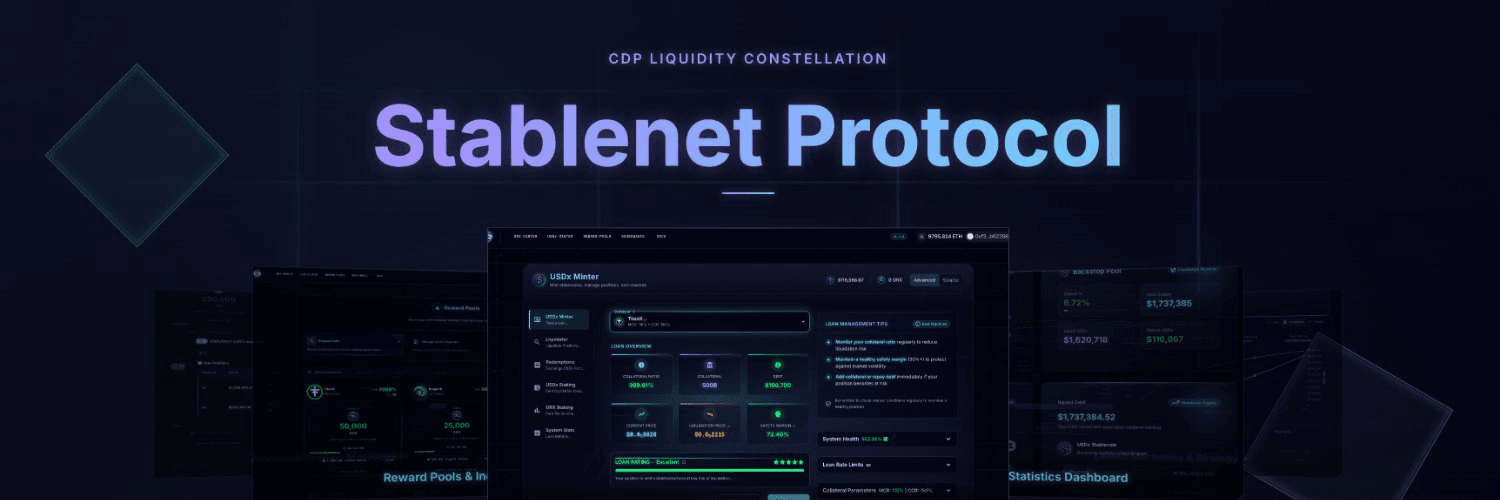
What is Ouroboros (ORX)?
Ouroboros (ORX) is the native value-accrual and coordination token of the Ouroboros Protocol, a DeFi ecosystem built on Ethereum and deeply integrated with the TitanX network. Unlike traditional cryptocurrencies that function as mediums of exchange or stores of value, ORX operates as a revenue-sharing mechanism.
Think of ORX as a "share token." When you hold and stake ORX, you receive a proportional share of 100% of all fees generated by every product within the Ouroboros ecosystem—starting with the USDx stablecoin.
Key Characteristics:
- Blockchain: Ethereum (ERC-20)
- Contract Address:
0xd536e7a9543cf9867a580b45cec7f748a1fe11ec - Ecosystem: TitanX-integrated
- Primary Function: Fee redistribution & supply compression
- Inflation Model: Zero (no minting after genesis)
Is Ouroboros (ORX) a Reserve Coin?
Many newcomers ask: "Is Ouroboros (ORX) a reserve coin?" The short answer is no. Despite being discussed alongside reserve assets, ORX does not fit the traditional definition.
Feature | Traditional Reserve Coin | Ouroboros (ORX) |
Backing | 1:1 collateral (fiat or crypto) | Protocol revenue (no fixed peg) |
Price Stability | Designed for stability | Volatile; driven by ecosystem performance |
Primary Use | Medium of exchange / hedge | Value accrual & staking rewards |
Example | USDC, DAI | ORX |
What ORX Actually Is: A revenue-backed token. Its value derives from three sources:
- Protocol fee generation
- Ecosystem adoption rates
- Token scarcity mechanisms (buy-and-burn + vesting penalties)
In contrast, USDx (the ecosystem's stablecoin) serves as the true collateral-backed asset, supported by TitanX and DragonX reserves.
How Does Ouroboros (ORX) Work?
The brilliance of ORX lies in its flywheel effect: more usage → more fees → more rewards → stronger demand → reduced supply. Here is how each component functions.
Fee Generation
Protocols within the Ouroboros ecosystem (starting with USDx) generate fees through:
- Borrowing against collateral
- Redemption operations
- Collateral management
100% Fee Distribution
Unlike most DeFi protocols that take a cut, Ouroboros distributes all fees to ORX stakers. Rewards are paid in USDx, TitanX, and other supported assets.
Buy-and-Burn Engine
TitanX deposits are used to automatically purchase ORX from liquidity pools (primarily Uniswap V3 and DODO). These purchased tokens are permanently removed from circulation.
Supply Compression Through Vesting
ORX launched via an Initial Lock Offering (ILO) with aggressive vesting schedules:
- 52-week vesting for TitanX depositors
- Heavy penalties for early claims (forfeited tokens are redistributed)
- 12-week vesting for ETH depositors (no penalties)
This mechanism ensures that circulating supply remains significantly lower than the theoretical max of ~1.27 billion ORX.
Ouroboros (ORX) Tokenomics
The ORX tokenomics model is often called "pumpamentals" —economic engineering designed to create sustained upward price pressure.
Tokenomic Feature | Mechanism | Effect on Price |
Buy & Burn Engine | TitanX deposits buy ORX from pools | ↓ Supply |
Vesting Penalties | Early exits forfeit tokens | ↓ Circulating supply |
Zero Inflation | No minting after genesis | No dilution |
Bonding Curve Emissions | Higher burn reduces future issuance | ↓ Supply over time |
Staking Rewards | 100% fee distribution in USDx/TitanX | ↑ Demand |
Current Market Snapshot (as of April 2026):
- Price: ~$0.00088 – $0.00092
- Market Cap: ~$430,000 – $470,000
- Circulating Supply: ~528 million ORX
- Trading Platforms: Uniswap V3, DODO
Can I Invest in Ouroboros (ORX)?
If you are asking "Can I invest in Ouroboros (ORX)?" , the short answer is yes—but not without understanding the significant risks involved. ORX is currently available through TitanX deposits, ETH deposits, or decentralized exchanges like Uniswap V3 and DODO. However, whether you should invest depends entirely on your risk tolerance, investment timeline, and familiarity with experimental DeFi mechanics.
Before making any decision, every potential investor must carefully evaluate the risks outlined below. Unlike blue-chip cryptocurrencies such as Bitcoin or Ethereum, ORX is an early-stage, experimental DeFi asset with a novel revenue-backed model.
Final Thoughts: Should You Buy Ouroboros (ORX)?
Ouroboros (ORX) is not for everyone. It is a high-risk, high-reward experimental DeFi asset designed specifically for patient participants who fully understand its complex mechanics.
You should consider buying ORX if you believe in the TitanX ecosystem's long-term growth, are comfortable locking your capital for 12 to 52 weeks, understand that ORX is volatile and not a stable asset, and want exposure to a zero-inflation, revenue-backed model.
On the other hand, you should avoid ORX if you need short-term liquidity, are risk-averse or new to DeFi, do not fully understand smart contract risks, or cannot afford to lose your entire investment.
For those who conduct their own research and accept the inherent risks, ORX offers a unique bet on the future of real-yield DeFi.
Ready to trade? WEEX offers zero fees, instant execution, and the security you need. Sign up on WEEX Now and Start Trading!
FAQ
Q1: What is Ouroboros (ORX) in simple terms?
Ouroboros (ORX) is a revenue-sharing token on Ethereum. When you stake ORX, you earn a portion of 100% of all fees generated by the Ouroboros Protocol ecosystem. It is not a stablecoin or a reserve coin—it is a value-capture token.
Q2: Is Ouroboros (ORX) a good investment?
ORX is a high-risk, high-conviction asset. Its zero-inflation model, buy-and-burn engine, and real-yield staking are innovative. However, risks include smart contract vulnerabilities, low liquidity, and heavy dependency on the TitanX ecosystem. Only invest what you can afford to lose.
Q3: Where can I stake Ouroboros (ORX)?
You can stake ORX directly through the official Ouroboros Protocol staking interface. There is no lock-up period—you can withdraw anytime. Rewards are distributed in USDx, TitanX, and other ecosystem assets.
Q4: What is the ORX contract address?
The official Ethereum contract address for Ouroboros (ORX) is: 0xd536e7a9543cf9867a580b45cec7f748a1fe11ec Always verify this address on Etherscan before any transaction to avoid spoofed tokens.
You may also like
UNOS vs UDOR: Which Is the Better Oil Coin in 2026?
UNOS vs UDOR explained with the latest UNOS price, UDOR Base listing, Solana vs Base comparison, market cap, supply, liquidity, and which oil coin is better in 2026.
UNOS vs UDOR: What’s the Difference?
UNOS vs UDOR explained with the latest UNOS price, UDOR price, Solana vs Base comparison, ticker confusion, market cap, supply, and the key differences crypto traders need to know.
Is United Nations Oil Supply (UNOS) a Legit Coin? A 2026 Review for Traders
Is United Nations Oil Supply (UNOS) a legit coin? Discover if UNOS crypto is real, safe, or risky. Learn about verification status, tokenomics, market data, and key red flags before investing.
Is United Nations Oil Supply (UNOS) a Good Investment? A Neutral 2026 Risk Analysis
Is United Nations Oil Supply (UNOS) a good investment? Read a neutral 2026 analysis of UNOS price, risks, unverified status, tokenomics, contract concerns, and whether UNOS is worth buying.
What Is United Nations Oil Supply (UNOS) Crypto? 5 Minutes To Know UNOS Coin
What is United Nations Oil Supply (UNOS) crypto? Learn how UNOS works, Solana tokenomics, official disclaimers, current market data, risks, and what buyers should verify before trading.
冲鸭 USDT Pair Debuts on WEEX for 冲鸭 (冲鸭) Coin
WEEX Exchange proudly lists 冲鸭 (冲鸭) coin, a project backed by a Binance co-founder, with trading opening on…

ROAF Price Prediction: Is Growth Still Possible in 2026?
As we head into 2026, ROAF remains a topic of intrigue among crypto traders, often tied to discussions…

What is 冲鸭 (冲鸭) Coin? Everything You Need to Know
冲鸭 (冲鸭) Coin is a newly launched cryptocurrency token released by a Binance co-founder, designed to power an…
Is MEGR Token the Next 10X Crypto or Just Hype?
The Middle Eastern Gas Reserve (MEGR) token has sparked curiosity in the crypto world by claiming to bridge…
WBTC vs BTC: Key Differences, Risks, and Which One to Choose
Bitcoin remains the cornerstone of cryptocurrency, offering unmatched security and decentralization, but it falls short when it comes…

What is RogueAI (ROGUEAI) Coin: A Comprehensive Guide to This AI-Powered Meme Token
RogueAI (ROGUEAI) is an innovative Base-native meme and game token that taps into a rogue AI theme, letting…

What is Mirror (MIRRORBASE) Coin? Everything You Need to Know
Mirror (MIRRORBASE) is a groundbreaking cryptocurrency designed to enable perfect asset mirroring on the blockchain, allowing users to…

BTCB vs BTC: Full Guide to Bitcoin BEP2, Risks & Use Cases
When comparing BTCB vs BTC, you’re essentially looking at native Bitcoin against its wrapped version on the Binance…
BTCB vs BTC: Which Is Safer, Faster, and More Profitable?
When diving into the world of cryptocurrencies, many newcomers grapple with the choice between native Bitcoin (BTC) and…

What is Middle Eastern Gas Reserve (MEGR) Coin: Comprehensive Guide for Beginners
Middle Eastern Gas Reserve (MEGR) is a cryptocurrency token on the Solana blockchain that claims to represent beneficiary…
WBTC vs BTC: Is WBTC Better Than BTC in 2026?
Wrapped Bitcoin (WBTC) and Bitcoin (BTC) represent two sides of the same coin in the crypto world, but…

冲鸭 (冲鸭) Price Prediction & Forecasts for May 2026: Could It Surge Amid Super App Ambitions?
As of May 6, 2026, the current price of 冲鸭 (冲鸭) stands at $0.85, with a 24-hour high…

Mirror (MIRRORBASE) Price Prediction & Forecasts for May 2026: Could the Mirror Revolution Spark a 50% Surge?
As of May 6, 2026, the current price of Mirror (MIRRORBASE) stands at $0.85, according to data from…
UNOS vs UDOR: Which Is the Better Oil Coin in 2026?
UNOS vs UDOR explained with the latest UNOS price, UDOR Base listing, Solana vs Base comparison, market cap, supply, liquidity, and which oil coin is better in 2026.
UNOS vs UDOR: What’s the Difference?
UNOS vs UDOR explained with the latest UNOS price, UDOR price, Solana vs Base comparison, ticker confusion, market cap, supply, and the key differences crypto traders need to know.
Is United Nations Oil Supply (UNOS) a Legit Coin? A 2026 Review for Traders
Is United Nations Oil Supply (UNOS) a legit coin? Discover if UNOS crypto is real, safe, or risky. Learn about verification status, tokenomics, market data, and key red flags before investing.
Is United Nations Oil Supply (UNOS) a Good Investment? A Neutral 2026 Risk Analysis
Is United Nations Oil Supply (UNOS) a good investment? Read a neutral 2026 analysis of UNOS price, risks, unverified status, tokenomics, contract concerns, and whether UNOS is worth buying.
What Is United Nations Oil Supply (UNOS) Crypto? 5 Minutes To Know UNOS Coin
What is United Nations Oil Supply (UNOS) crypto? Learn how UNOS works, Solana tokenomics, official disclaimers, current market data, risks, and what buyers should verify before trading.
冲鸭 USDT Pair Debuts on WEEX for 冲鸭 (冲鸭) Coin
WEEX Exchange proudly lists 冲鸭 (冲鸭) coin, a project backed by a Binance co-founder, with trading opening on…


