
- Buy Crypto
- Markets
 Futures
- Spot
- Copy Trade
- Earn
- More
US Banks “Tanking” Stablecoin Law? Ripple CTO Schwartz Agrees
By: cryptosheadlines|2025/05/15 07:30:06
0
Share
Airdrop Is Live CaryptosHeadlines Media Has Launched Its Native Token CHT. Airdrop Is Live For Everyone, Claim Instant 5000 CHT Tokens Worth Of $50 USDT. Join the Airdrop at the official website, CryptosHeadlinesToken.com Fear has been cited as the main reason why banks may be the main culpritEarlier this month, the GENIUS Act failed to pass a full Senate vote, as the bill didn’t get the 60 votes neededNine Senate Democrats were against it, along with two of their Republican peersThere is a discussion going on among crypto enthusiasts, with the topic being that someone is adamant about tanking the stablecoin legislation. The main suggested culprits are regional US banks, and Ripple’s CTO David Schwartz seems to agree, saying: “That’s what I’m hearing.”Fear has been cited as the main reason why this may be true. Banks fear stablecoins could disintermediate their market share, with critics like Senator Elizabeth Warren proposing amendments to block tech firms from issuing stablecoins. This just highlights tensions between traditional finance and crypto innovation.The notion isn’t anything new, as it’s been talked about before how traditional banking institutions perceive stablecoins as a competitive threat to their dominance in payment systems. This also explains why the stablecoin bill GENIUS Act failed in its recent vote.GENIUS ActOne of the main legislations surrounding stablecoins is the GENIUS Act. Short for ‘Guiding and Establishing National Innovation for US Stablecoins’, it seeks to regulate stablecoin issuers and integrate them into the US financial system. Two months ago, the GENIUS Act passed the Senate Banking Committee with an 18-6 vote to regulate stablecoins comprehensively.However, earlier this month, it failed to pass a full Senate vote, as the bill didn’t get the 60 votes needed due to nine Senate Democrats withdrawing their support, as well as two of their Republican peers.Some mentioned the insufficient anti-money laundering provisions and potential national security risks as reasons for withdrawal, while other reasons were reports of Donald Trump’s ties to crypto ventures, including a $2 billion investment in a Trump-affiliated stablecoin.Such a turn of events could point to deep divisions and the influence of external factors like the banking sector lobbying.Influence on the Crypto EcosystemThe interplay between traditional banking interests and emerging crypto regulations will likely shape the future of the financial industry. If the GENIUS Act or any similar stablecoin bills pass in the future, it could be seen as a potential disruptor to banks’ traditional financial services.For instance, stablecoins could enable peer-to-peer transactions without the need for usual banking intermediaries. Whatever the case, the sooner this is done, the better it will be for the crypto industry, as clear and fair regulations could bolster investor confidence, while prolonged uncertainty may hinder the growth of the crypto sector.Still, one thing is for sure – the outcome of the GENIUS Act will set precedents for how digital assets are integrated and regulated within the US financial framework.Disclaimer: The information presented in this article is for informational and educational purposes only. The article does not constitute financial advice or advice of any kind. Coin Edition is not responsible for any losses incurred as a result of the utilization of content, products, or services mentioned. Readers are advised to exercise caution before taking any action related to the company.Source link
You may also like

The second half of stablecoins no longer belongs to the crypto circle
What Coinbase doesn't want, Mastercard is eager to buy.

Cursor "Shell" Kimi Controversy Reversed: From Copyright Infringement Allegations to Authorized Collaboration, China's Open Source Model Once Again Becomes a Global AI Foundation
Cursor was accused of being based on Kimi K2.5, which sparked controversy, and was later confirmed to be compliant through Fireworks AI due diligence.

The Real Reason Tokens Don't Sell: 90% of Crypto Projects Overlook Investor Relations
Provide an Investor Relations Best Practices Guide for Crypto Projects.

Is the income of pump.fun real, earning a million dollars a day despite the market downturn?
If it can really earn this much, what is the reason for the low price of $PUMP?

The real reason why tokens are not selling: 90% of crypto projects neglect investor relations
Investor Relations Practice Guide for Cryptocurrency Projects.

Who is the true winner of the "Tokenization" narrative?
Virtually everyone benefits, but the reason for the benefit, the timing, and the underlying logic are completely different.

Moss: The Era of AI-Traded by Anyone | Project Introduction
AI Trading Agent is rapidly growing its infrastructure.

Chip Smuggling Case Exposes Regulatory Loophole | Rewire News Evening Update
AI chips have become a strategic asset more sensitive than missiles

How a Structured AI Crypto Trading Bot Won at the WEEX Hackathon
Ritmex demonstrates how disciplined risk control and structured signals can make an AI crypto trading bot more stable and reliable on WEEX, highlighting the importance of combining execution discipline with scalable AI trading systems.

Old Indicator Fails, Three Major New Signals Emerge: BTC True Bottom May Still Be Below $60K
When the grocery shopping auntie on the subway, or Tony the hairdresser, start asking you about BTC, crypto, and cryptocurrency investments, selling immediately will be the only best option.

Meeting OpenClaw Founder at a Hackathon: What Else Can Lobsters Do?
Imperial College London MetaGame: AI Agent × Web3 Landing Three Major Directions.
Huang Renxun's Latest Podcast Transcript: NVIDIA's Future, Embodied Intelligence and Agent Development, Soaring Demand for Inferencing, and AI's PR Crisis
The future of competition is not only about whose model is bigger, whose computing power is stronger, but also about who understands the industry better, who can more deeply integrate AI into real processes, and who can organize these capabilities into a set of executable, scalable systems
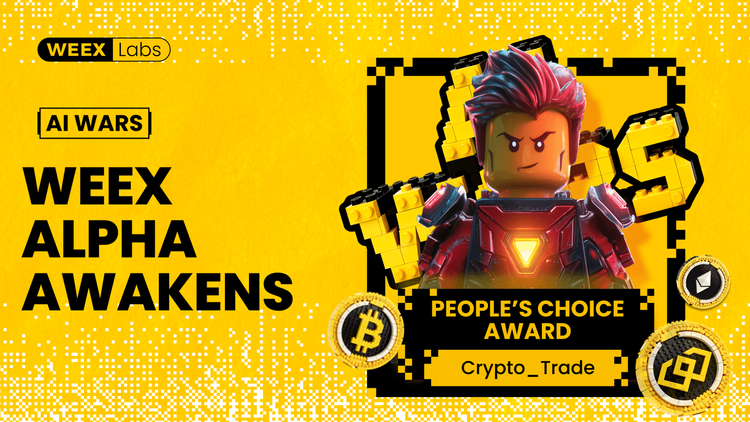
How a Structured AI Crypto Trading Bot Won at the WEEX Hackathon
Crypto_Trade shows how structured inputs and controlled adaptability can build a more stable and reliable AI crypto trading bot within the WEEX AI Trading Hackathon, highlighting a practical path toward scalable AI trading systems.

AI Starts to Devour the Manufacturing Industry | Rewire News Morning Edition
When Bezos starts using AI to buy factories instead of building data centers, it shows that he believes the next wave of AI's value is not inside the box.
When Scaling Meets Speed, Ethereum Foundation Introduces "Hardness" to Safeguard the Base Layer
Hardness is a protocol-level commitment to Ethereum core properties, including censorship resistance, privacy, security, and permissionlessness.
Google, Circle, Stripe Flock Together to Let AI Spend Money: Payment Giants' Joys and Worries in 2026 Q1
The real enemy is no longer each other, but zero cost itself

$100 Billion Factory Purchase: Bezos and Middle Eastern Capital Shift AI Money from Cloud to Shop Floor
Bezos doesn't invest in a new model; he invests in a supply chain.

Xiaomi and MiniMax both unleash their ultimate moves, signaling the start of the Agent Pricing War.
No brand, no marketing, let developers vote with their feet in 8 days
The second half of stablecoins no longer belongs to the crypto circle
What Coinbase doesn't want, Mastercard is eager to buy.
Cursor "Shell" Kimi Controversy Reversed: From Copyright Infringement Allegations to Authorized Collaboration, China's Open Source Model Once Again Becomes a Global AI Foundation
Cursor was accused of being based on Kimi K2.5, which sparked controversy, and was later confirmed to be compliant through Fireworks AI due diligence.
The Real Reason Tokens Don't Sell: 90% of Crypto Projects Overlook Investor Relations
Provide an Investor Relations Best Practices Guide for Crypto Projects.
Is the income of pump.fun real, earning a million dollars a day despite the market downturn?
If it can really earn this much, what is the reason for the low price of $PUMP?
The real reason why tokens are not selling: 90% of crypto projects neglect investor relations
Investor Relations Practice Guide for Cryptocurrency Projects.
Who is the true winner of the "Tokenization" narrative?
Virtually everyone benefits, but the reason for the benefit, the timing, and the underlying logic are completely different.


 App
App