
- Buy Crypto
- Markets
 Futures
- Spot
- Copy Trade
- Earn
- More
Stablecoin Public Blockchain Stable Amends Pre-Minting Rules, Changing Hard Cap to Allow for Overfunding and Introducing a 24-Hour Delay

BlockBeats News, November 7th, Hourglass released a post explaining the progress of the Stable Pre-Deposit Activity Phase 2, making the following adjustments:
Deposit: Users can deposit through the Hourglass frontend or directly on-chain (frontend usage recommended for security), the deposit window will reopen for 24 hours from the time of this post (Beijing Time 9:25 AM), with a per-wallet limit of 1 million US dollars, and the minimum deposit amount remains at 1,000 US dollars. Funds can be withdrawn at a 1:1 ratio at any time before the KYC phase is completed. Users who have not completed KYC can also withdraw at any time. If a successful deposit was made previously, the deposit will still be counted and deemed eligible.
Eligibility and KYC: After the deposit window closes, users have 72 hours to submit KYC information. Once KYC verification is completed, all eligible deposits will be transferred to the custodian and then deposited at the banking partner. Among the eligible deposits, a portion will be sent proportionally to the banking partner, and the remaining portion can be withdrawn via the withdrawal contract.
Allocation Model: If the total eligible deposits exceed 500 million US dollars, they will be allocated proportionally. For example, if the total eligible deposits = 1 billion US dollars, each wallet will receive 0.5 times its deposit amount; the remaining portion can be withdrawn via the withdrawal contract.
Settlement: The final allocation (in USDT form) will be settled on the Stable mainnet no later than December 31st.
Contract Recovery: Depositors who accidentally set the contract address as the deposit address can recover their USDC after the erroneous deposit is transferred to Anchorage custody via the transferToTreasury function.
You may also like

Particle Founder: The entrepreneurial insights I have gained the most from in the past year

Huang Renxun's latest podcast transcript: The future of Nvidia, the development of embodied intelligence and agents, the explosion of inference demand, and the public relations crisis of artificial intelligence

OKX Ventures Research Report: AI Agent Economic Infrastructure Research Report (Part 1)

The migration of settlement rights: B18 and the institutional starting point of on-chain banks

From Tencent and Circle: Looking at the Simple and Difficult Questions of Investment

The second half of stablecoins no longer belongs to the crypto circle

Cursor "Shell" Kimi Controversy Reversed: From Copyright Infringement Allegations to Authorized Collaboration, China's Open Source Model Once Again Becomes a Global AI Foundation

The Real Reason Tokens Don't Sell: 90% of Crypto Projects Overlook Investor Relations

Is the income of pump.fun real, earning a million dollars a day despite the market downturn?

The real reason why tokens are not selling: 90% of crypto projects neglect investor relations

Who is the true winner of the "Tokenization" narrative?

Moss: The Era of AI-Traded by Anyone | Project Introduction

Chip Smuggling Case Exposes Regulatory Loophole | Rewire News Evening Update

How a Structured AI Crypto Trading Bot Won at the WEEX Hackathon
Ritmex demonstrates how disciplined risk control and structured signals can make an AI crypto trading bot more stable and reliable on WEEX, highlighting the importance of combining execution discipline with scalable AI trading systems.

Old Indicator Fails, Three Major New Signals Emerge: BTC True Bottom May Still Be Below $60K

Meeting OpenClaw Founder at a Hackathon: What Else Can Lobsters Do?
Huang Renxun's Latest Podcast Transcript: NVIDIA's Future, Embodied Intelligence and Agent Development, Soaring Demand for Inferencing, and AI's PR Crisis
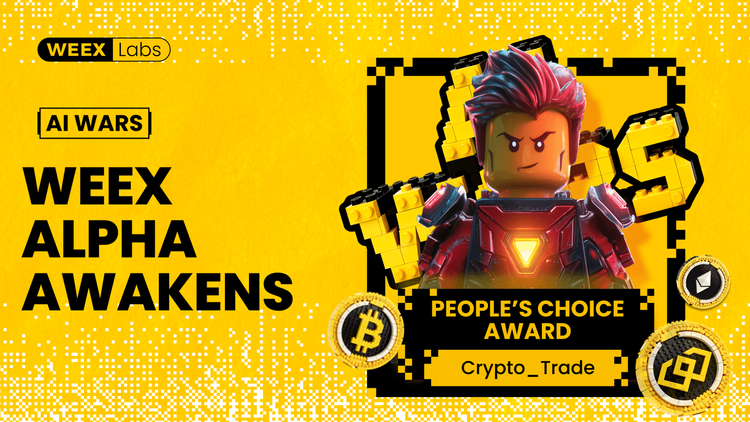
How a Structured AI Crypto Trading Bot Won at the WEEX Hackathon
Crypto_Trade shows how structured inputs and controlled adaptability can build a more stable and reliable AI crypto trading bot within the WEEX AI Trading Hackathon, highlighting a practical path toward scalable AI trading systems.


 App
App