
- Buy Crypto
- Markets
 Futures
- Spot
- Copy Trade
- Earn
- More
Shitcoin is Dead, Equity Coin is Rising

Original Article Title: The Day of Reckoning for Tokens & Stonkification of DeFi
Original Article Author: Patrick Scott, Dynamo DeFi
Original Article Translation: Deep Tide TechFlow
The day of reckoning for the crypto industry has finally arrived.
Over the past five years, tokens have enjoyed what I would politely call a state of "speculative demand far exceeding fundamentals." Less politely, they have been severely overvalued.
The reason is actually quite simple: there are not many fundamentally sound liquid assets in the crypto industry. Therefore, investors have had to seek exposure through the assets they can access, which are typically Bitcoin or shitcoins. Along with retail investors hearing stories of "Bitcoin millionaires," they have hoped to replicate those returns through investing in newer, smaller tokens.
This has led to a demand for shitcoins far surpassing the actual supply of shitcoins with solid fundamentals.
First-Level Effect
During times of market euphoria, you could buy any asset at will, and a few years later, you would achieve astonishing returns.
Second-Level Effect
The business model of most projects in the industry (if you can call it a business model) revolves around selling their own tokens rather than relying on actual revenue tied to their product.
In the past two years, the shitcoin market has experienced three events with disastrous consequences:
1. The Rise of "Pump Farms" and Other Token Launch Platforms
These platforms have "commodified" the issuance of new tokens, making it overly common, leading to attention being diverted to millions of assets. This diversification effect has prevented the top few thousand tokens from continuing to attract concentrated inflows, disrupting the wealth effect typically seen with Bitcoin halving.
1_0
Many days earlier this year, Pump platforms were listing over 50,000 tokens daily.
2. Some Crypto Assets are Starting to Have Real Fundamentals
Some tokens (such as HYPE) and new IPO projects (such as CRCL) are starting to show true fundamentals. Once assets supported by fundamentals appear on the market, it becomes difficult to bet on tokens that are only backed by a whitepaper.
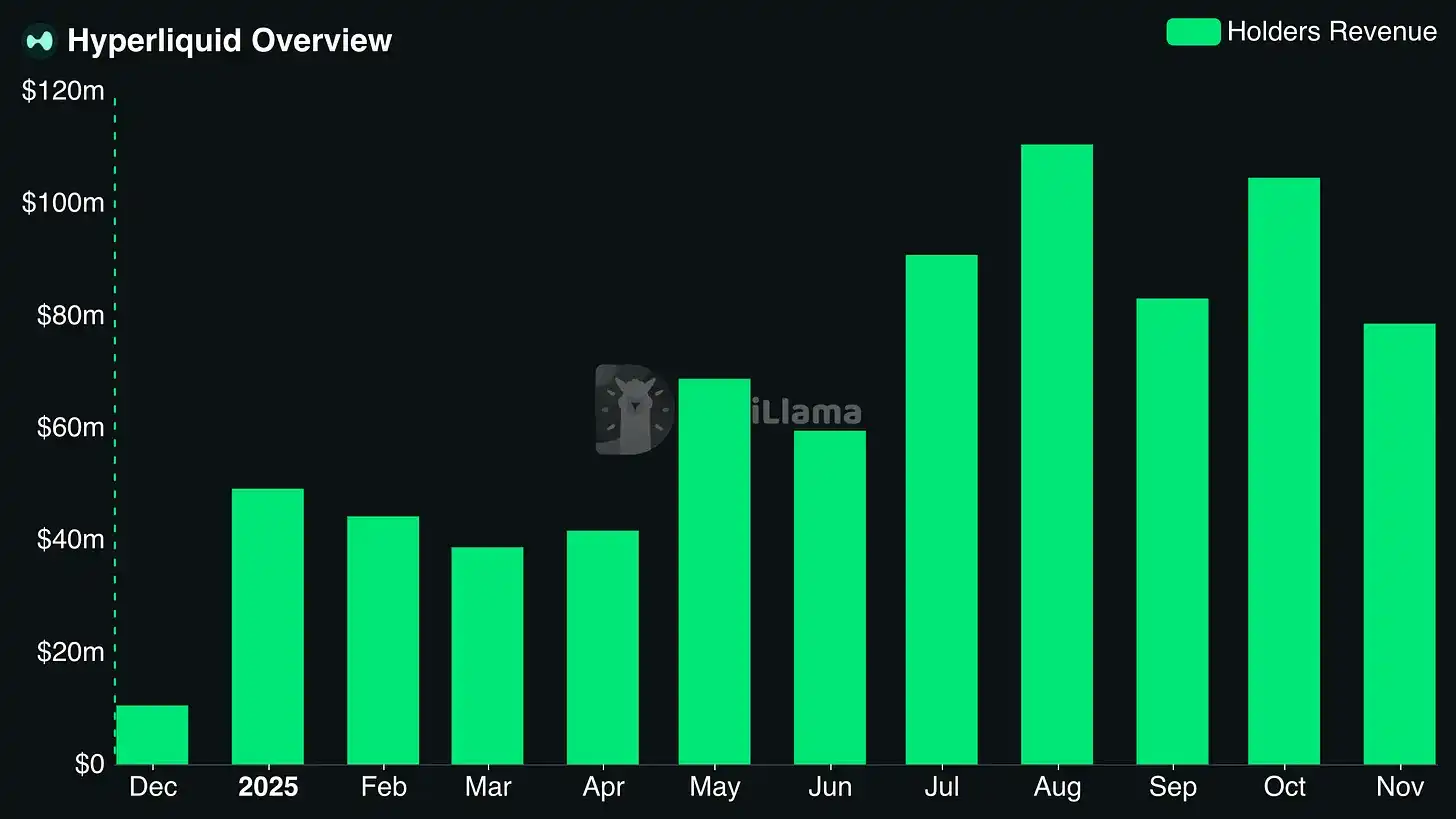
Hyperliquid holders' monthly income often exceeds $1 billion
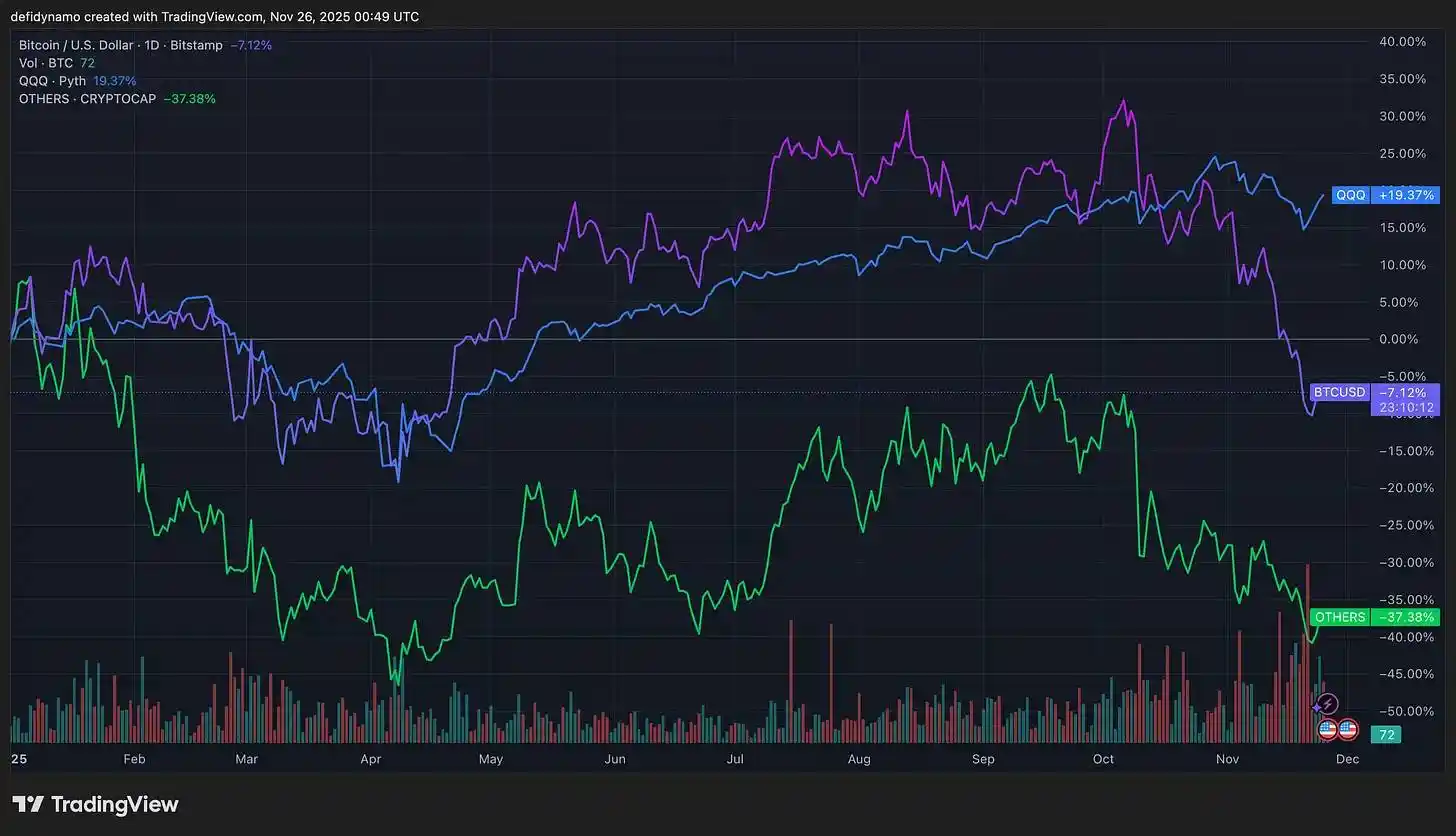
3. Meanwhile, Tech Stocks Outperform the Crypto Market. In many cases, stocks related to artificial intelligence, robotics, biotech, and quantum computing have outperformed the crypto market. This leaves retail investors wondering: why risk investing in meme coins when "real" companies are providing higher returns with seemingly lower risk? Even NASDAQ's performance this year has surpassed that of Bitcoin and meme coins.
What Are the Results?
· Underperforming meme coins have become a "graveyard";
· Teams are fiercely competing in an increasingly scarce capital pool;
· Experienced crypto investors have also become overwhelmed, searching for investment directions like a headless fly.
Ultimately, tokens either represent equity in a business or they are worthless. They are not some magical new thing that gains value just by existing.
If you stop seeing tokens as something cryptic and instead view them as assets representing a company's future cash flow, everything will become clearer.
But you might argue, "Dynamo, some tokens do not grant rights to future cash flow! Some tokens are utility tokens! Some protocols have both tokens and equity!" But you are mistaken. These tokens still represent future cash flow; it's just that the associated cash flow happens to be $0.
In the end, tokens either provide equity in a business or they are worthless. They do not automatically gain value through "existence" or "community" as many people believe.
It should be noted that this view does not apply to network coins like Bitcoin (BTC) as they are closer to the characteristics of commodities; what we are discussing here are protocol tokens.
In the near future, the only DeFi tokens with real value will be those that exist as quasi-equity tokens and meet the following two conditions:
1. A claim on protocol revenue;
2. Protocol revenue sufficient to make it an attractive value proposition.
Retail Investors Are "Breaking Up" with the Crypto Market
Retail investors are temporarily saying goodbye to the crypto market.
Some top KOLs are shouting "crime is legal," yet they are surprised that people are reluctant to become "victims of crime."
As of now, retail interest has waned for the vast majority of tokens.
In addition to the reasons mentioned earlier, another significant factor is: People are tired of losing money.
1. Overinflated Promises: The value of many tokens is built on promises that cannot be kept.
2. Oversupply of Tokens: The rise of memecoin issuance platforms has led to a severe oversupply of tokens in the market.
3. Extractive Tokenomics: Industry tolerance for valueless tokens has led retail investors to rightly believe they are destined to "buy the dip."
What is the result? Those who would have bought crypto assets are now looking for other outlets to satisfy their "gambling desires," such as sports betting, prediction markets, and stock options. These choices may not be wise, but buying most altcoins is not a great idea either.
But can we blame these people?
Some KOLs discuss "crime is legal" on one hand, yet are surprised that people are unwilling to be victims.
This public apathy towards the crypto market is also reflected in interest in the industry. This year's enthusiasm is far from reaching the heights of 2021, even though the current fundamentals are better than ever and regulatory risks are lower.
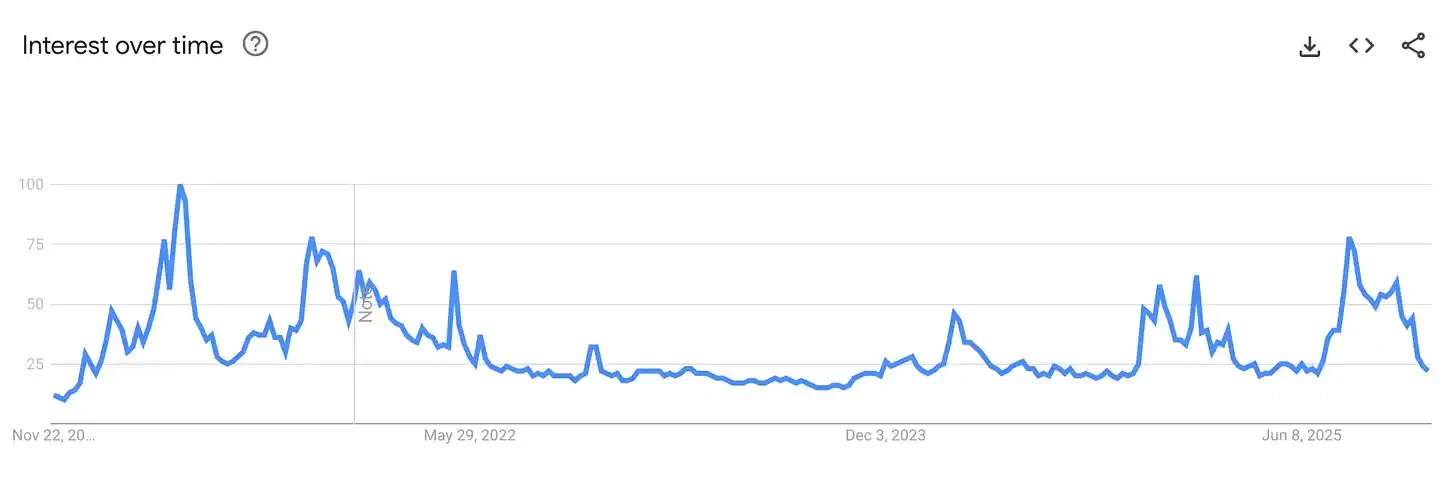
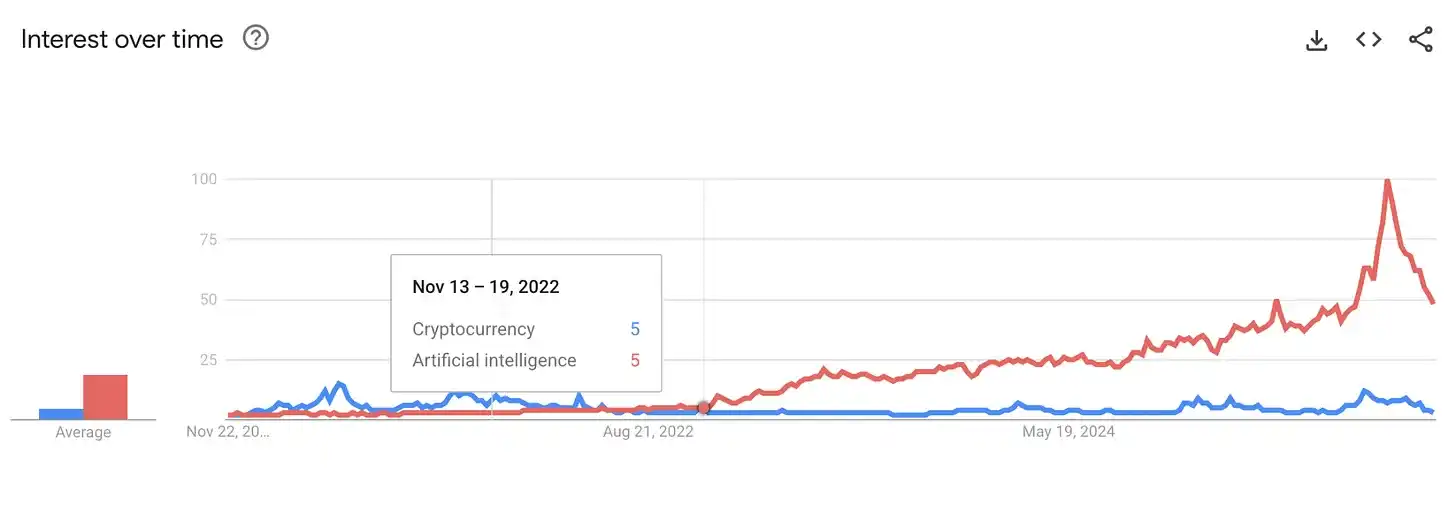
I also believe that ChatGPT and the subsequent AI hype have dampened people's enthusiasm for cryptocurrency by showing the new generation what a true "killer product" looks like.
Over the past decade, cryptocurrency enthusiasts have been talking about the cryptocurrency industry being a new "Dot-Com Moment." However, as people see artificial intelligence reshaping their world in a more tangible and pervasive way every day, that narrative becomes increasingly harder to sell.
The discrepancy in search engine attention between crypto and AI is glaringly obvious. The last time cryptocurrency surpassed AI in Google search interest was during the FTX Flash Crash:
Will retail investors return to the crypto market?
The answer is: yes.
One could argue that retail investors have already returned today in a way to some form of a prediction market, but what they are buying are binary options on "when will the government shutdown end" rather than shitcoins. To get them to buy shitcoins en masse again, they need to feel they have a reasonable shot at profits.
The Core Source of Token Value: Protocol Revenue
In a world where a token cannot rely on a constant influx of speculative buyers, they must stand on their intrinsic value.
After five years of experimentation, the painful truth has become evident: the only meaningful form of token value accumulation is a claim on protocol revenue (be it past, current, or future).
All these various forms of real value accumulation ultimately boil down to a claim on protocol revenue or assets:
· Dividends
· Buybacks
· Fee Burns
· Treasury Control
This does not mean that a protocol must execute these measures today to have value. In the past, I faced criticism for stating that I hoped the protocol I was bullish on would reinvest revenue instead of conducting buybacks. However, protocols need to have the ability in the future to initiate these value accrual mechanisms, ideally through governance voting or meeting explicit criteria. Vague promises are no longer sufficient.
Fortunately, for savvy investors, this fundamental data is readily available on platforms like DefiLlama, covering thousands of protocols.
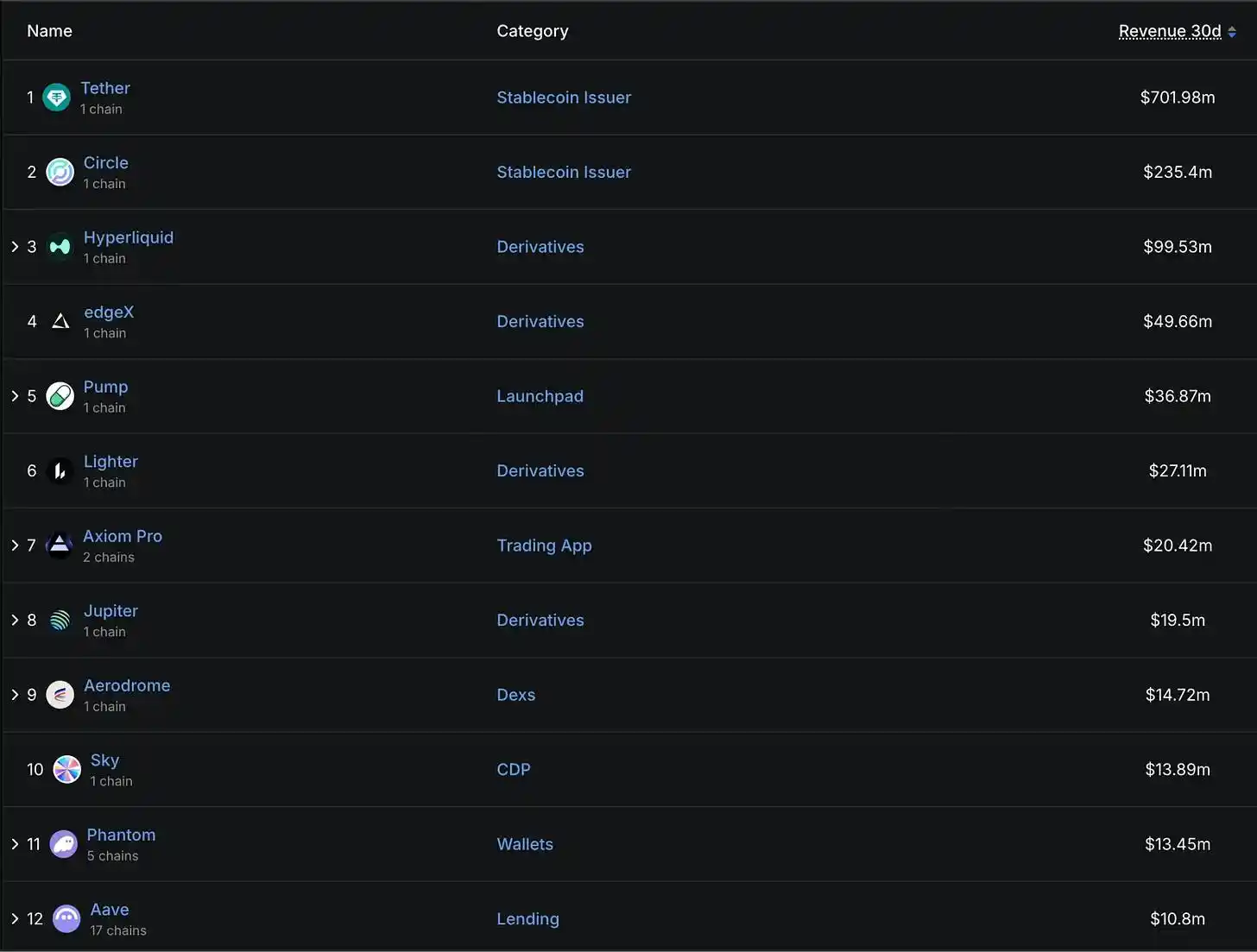
A quick look at the top protocols ranked by revenue in the past 30 days clearly shows a pattern: Stablecoin Issuers and Derivatives Platforms take the lead, while Launchpads (Token Issuance Platforms), Trading Apps, CDPs (Collateralized Debt Positions), Wallets, Decentralized Exchanges (DEXs), and Lending Protocols also make a showing.
Some key conclusions to note:
1. Stablecoins and Perpetual Contracts are the two most profitable businesses in the current crypto industry
2. Trading-related businesses remain highly profitable
Overall, businesses supporting trading are lucrative. However, if the market enters a prolonged bear market, revenue from trading-related activities may face significant risks unless protocols can pivot towards trading Real World Assets (RWAs), as attempted by Hyperliquid.
3. Controlling distribution channels is as important as building underlying protocols
I speculate that there may be a segment of hardcore DeFi users vehemently against trading apps or wallets being top revenue sources, as users can interact directly with the protocol to save costs. However, in reality, apps like Axiom and Phantom are extremely profitable.
Some crypto apps generate tens of millions of dollars in revenue monthly. If the protocol you're focused on hasn't reached that level yet, that's okay. As someone responsible for DefiLlama's revenue, I know firsthand that developing a product that a market is willing to pay for takes time. But the key is, there must be a path to profitability.
The era of playtime is over.
Value-Oriented Crypto World: Investment Framework Analysis
When looking for investment tokens in the coming years, the strong-performing tokens should meet the following criteria:
1. Claim on Protocol Revenue or Clear Transparent Revenue Claim Path
2. Stable and Sustainable Income and Revenue
3. Market Cap Reasonably Multiple to Past Revenue
Instead of just talking theory, let's look at a few specific examples:
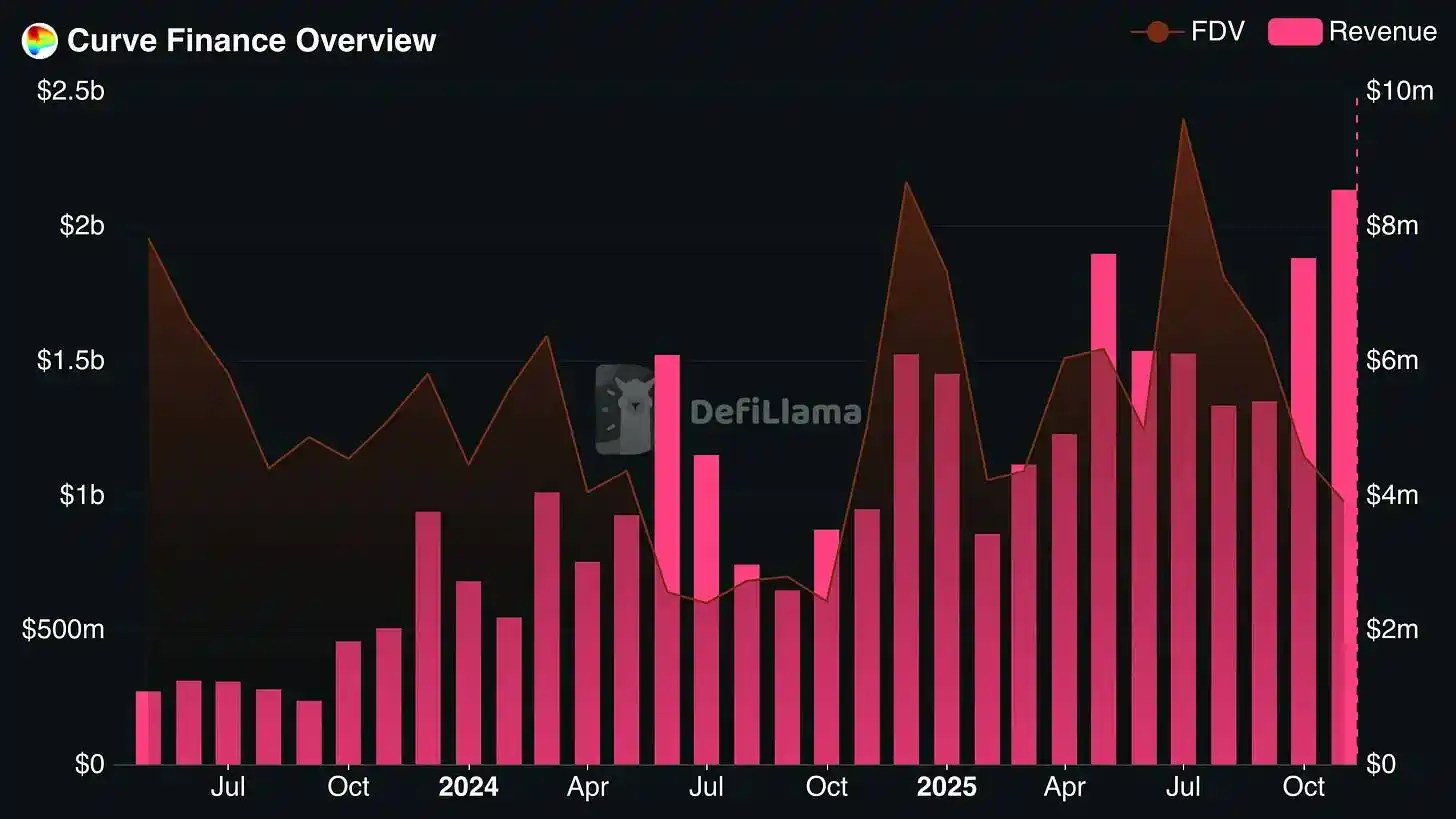
Curve Finance
Curve Finance has achieved stable and sustained revenue growth over the past three years, even as its Fully Diluted Valuation (FDV) has decreased. Ultimately, its FDV has fallen to less than 8 times Curve's past month's annualized revenue.
Due to bribes available to Curve token holders who lock their tokens, along with the long token release schedule, the actual yield on the token is much higher. The next thing to watch is whether Curve can maintain its revenue levels in the coming months.
Jupiter
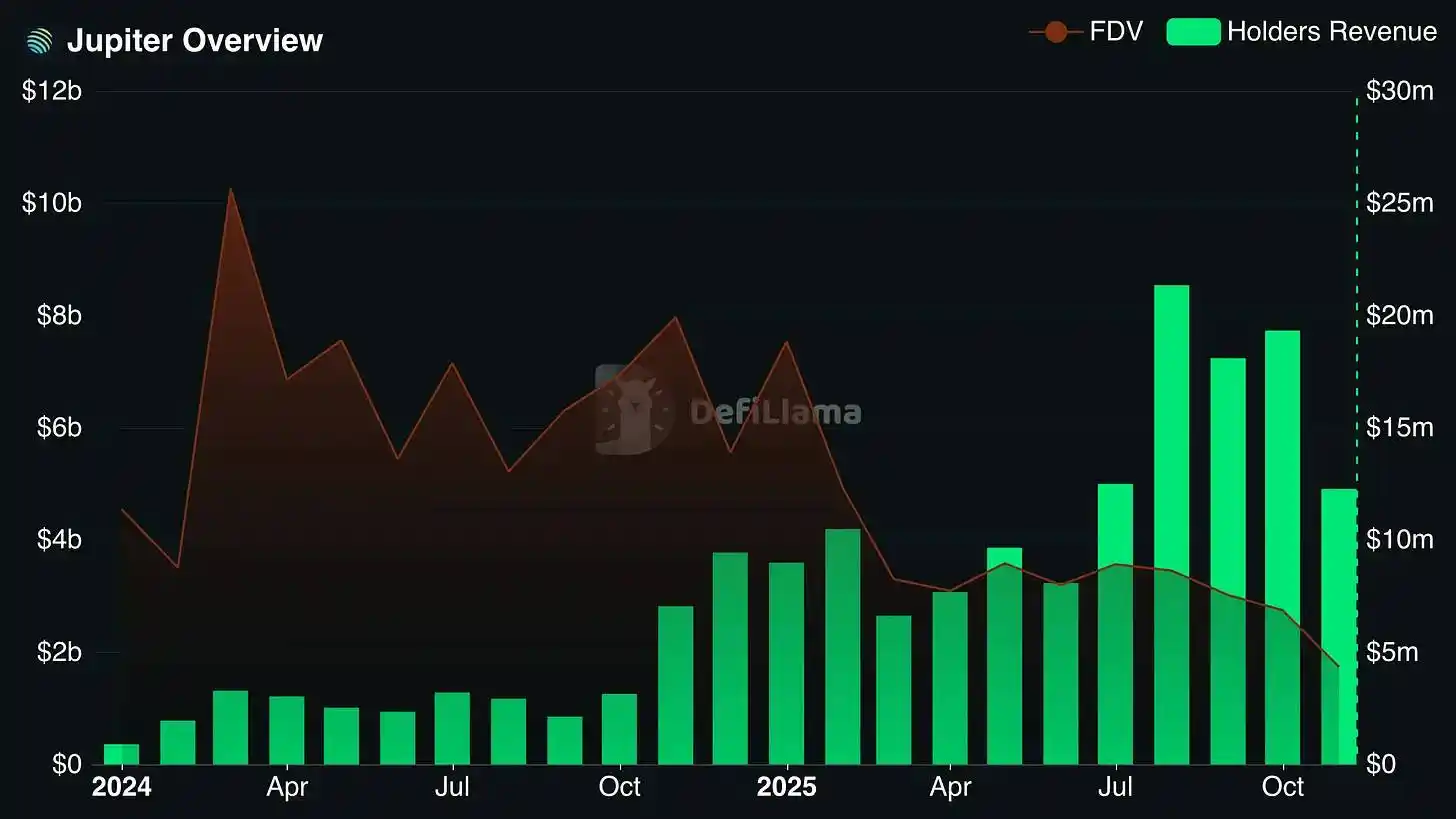
Jupiter has solidified its position as one of the primary beneficiaries of the Solana ecosystem's prosperity. It is the most widely used DEX aggregator and perpetual decentralized exchange platform (perp DEX) on the Solana chain.
Additionally, Jupiter has made several strategic acquisitions, allowing it to expand to markets on other chains using its own distribution channels.
Notably, Jupiter's annualized income distributed to token holders is significant, accounting for approximately 25% of the circulating market cap, surpassing 10% of FDV (Fully Diluted Valuation).
Other compliant protocols: Hyperliquid, Sky, Aerodrome, and Pendle
Positive Signal: Beacon of Hope
The good news is that teams who truly care about their own survival are rapidly becoming aware of this. I anticipate that in the next few years, the pressure of being unable to endlessly dump tokens will lead more DeFi projects to develop actual revenue streams and tie their tokens to these income flows.
If you know where to look, the future is promising.
You may also like

Bloomberg: A Romanian Presidential Election Intervened by Crypto Traders

Founders Fund, Pantera, and Franklin Templeton join Sentient's "Arena" to stress test enterprise-level AI agents

Why Retail Is Shifting From Crypto to Equities: Will They Return?
Retail traders are exiting the crypto market and gravitating towards equities. Bitcoin saw a notable reduction in spot…

Canton Crypto Network vs. XRP: Understanding DTCC’s Strategic Approach to Infrastructure and Liquidity
Key Takeaways Canton Network and XRP serve distinct roles in blockchain technology: Canton for asset tokenization and atomic…

Jack Dorsey’s Block to Cut 4,000 Jobs in AI-Driven Restructuring
Key Takeaways Block’s significant job cuts aim to streamline operations for AI-driven growth. The company’s stock surged over…

Axiom Crypto Uncovered: ZachXBT Reveals $400k Insider Trading
Key Takeaways Allegations of insider trading at Axiom Crypto involve approximately $400,000 and a complex scheme where employees…

Ethereum 2029 Roadmap: ETH to Become the High-Speed Internet of Value
Key Takeaways Ethereum’s new roadmap, the “Strawmap,” aims for a settlement layer achieving 10,000 transactions per second (TPS)…
India Enhances Crypto KYC and AML Measures with Live ID and Location Checks
Key Takeaways: India classifies crypto exchanges as Virtual Digital Asset (VDA) service providers requiring enhanced Anti-Money Laundering (AML)…

Bitcoin Price Prediction: $500 Million in Short Positions Just Got Wiped Out — Is a Bull Market Beginning?
Key Takeaways: Bitcoin experienced a massive short squeeze, liquidating nearly $500 million in short positions and propelling its…

XRP Price Prediction: Ripple Invests Billions to Forge a Connection with Banks – Is $1,000 Possible?
Key Takeaways: Ripple has invested around $4 billion in establishing connections between traditional banks and crypto platforms, illustrating…

Crypto Price Prediction Today 26 February – XRP, Bitcoin, Ethereum
Key Takeaways Bitcoin has rebounded above $68,000, reigniting optimism within the crypto market and potentially signaling a shift…

Google’s Gemini AI Predicts the Price of XRP, Dogecoin, and Shiba Inu by the End of 2026
Key Takeaways Google’s Gemini AI forecasts significant price surges for XRP, Dogecoin, and Shiba Inu by the end…

Wall Street Frontrunning Retail? Institutions Flooded Ethereum Before 15% Price Rally
Key Takeaways Institutional Inflows Surge: A massive $157 million institutional inflow was recorded into Ethereum ETFs in a…

Animoca’s Yat Siu Says AI Agents Will Make 2026 the ‘Year of Utility’
Key Takeaways Animoca’s Yat Siu envisions a future where AI agents and blockchain seamlessly integrate, making 2026 a…
Chainlink Price Surges: What’s Behind Today’s LINK Rally?
Key Takeaways Chainlink’s price has experienced a notable surge, increasing over 14% to reach $9.35, its highest since…
Crypto Exchange Kraken Aims to Reignite Services in India
Key Takeaways Kraken is making strides to re-establish its footprint in the Indian cryptocurrency market. Vishesh Khurana has…

Crypto Rebound: Bitcoin Hits $68,000, Circle’s Revenue Climbs, and NEAR’s Confident Rise
Key Takeaways Bitcoin’s recent surge to $68,000 represents a strategic market rebound, driven by structural support and forced…

MetaMask Expands Mastercard Crypto Card Across the U.S.
Key Takeaways MetaMask has launched its self-custodial crypto card across all 50 U.S. states, broadening the accessibility of…
Bloomberg: A Romanian Presidential Election Intervened by Crypto Traders
Founders Fund, Pantera, and Franklin Templeton join Sentient's "Arena" to stress test enterprise-level AI agents
Why Retail Is Shifting From Crypto to Equities: Will They Return?
Retail traders are exiting the crypto market and gravitating towards equities. Bitcoin saw a notable reduction in spot…
Canton Crypto Network vs. XRP: Understanding DTCC’s Strategic Approach to Infrastructure and Liquidity
Key Takeaways Canton Network and XRP serve distinct roles in blockchain technology: Canton for asset tokenization and atomic…
Jack Dorsey’s Block to Cut 4,000 Jobs in AI-Driven Restructuring
Key Takeaways Block’s significant job cuts aim to streamline operations for AI-driven growth. The company’s stock surged over…
Axiom Crypto Uncovered: ZachXBT Reveals $400k Insider Trading
Key Takeaways Allegations of insider trading at Axiom Crypto involve approximately $400,000 and a complex scheme where employees…


 App
App