
AI Crypto Trading in 2026: How AI Agents Use Stablecoins for Capital Management and Settlement

 Prefer us on Google



In 2026, AI-driven trading assistants no longer just suggest strategies — they are beginning to manage capital across the full lifecycle.
What once required manual configuration, bespoke scripts, or isolated trading bots is converging into wallet-native agents. These systems can market-make perpetuals, arbitrage across L2s, allocate idle capital into DeFi pools, and pay — programmatically — for gas, data, compute, and execution.
While still early-stage, these capabilities signal a structural shift. AI is moving from a passive decision aid to an economic actor — operating with its own balance sheet, execution rules, and spending logic.
Stablecoins Become the Global Payroll Layer
By 2026, stablecoins are no longer just a trader’s parking asset.
They are increasingly used for cross-border B2B settlement, platform payouts, and programmable compensation — effectively forming a global, always-on payroll layer.
For humans, stablecoins reduce friction: FX costs, banking delays, and settlement hours. For AI agents, they solve something more fundamental: machine-native money flow.
AI does not respond to brand narratives. It optimizes for uptime, settlement finality, compliance constraints, and the ability to move funds instantly — across chains, protocols, and venues — without manual intervention.
If You Were an AI, Which “Dollar” Would You Pick?
When humans choose a stablecoin, brand familiarity or yield often dominates the decision. AI agents optimize differently. Their preferences are constrained by execution requirements, risk boundaries, and system reliability. As a result, there is no single “best” stablecoin — only ones fit for specific tasks. Several factors consistently matter.
Compliance and Longevity
AI agents often act on behalf of users, DAOs, or institutions. Stablecoins with transparent reserves, predictable governance, and reliable redemption paths reduce the risk of frozen liquidity, blacklisting events, or regulatory dead ends. For long-running systems, rule stability frequently outweighs incremental yield.
Settlement Speed and Reach
Execution fails when capital arrives late. High-frequency trading, cross-chain arbitrage, and perpetual strategies depend on deep liquidity and fast settlement across L1s, L2s, and trading venues. Missed settlement windows are often more costly than missed yield.
Capital Efficiency
Stablecoins are no longer inert balances. AI agents typically segment capital into liquid stablecoins for execution and margin, and yield-bearing variants for idle funds — rebalancing continuously by code as market conditions change.
Programmability
For AI, money is infrastructure. Stablecoins that integrate cleanly into wallets, smart contracts, bridges, and execution frameworks gain a structural advantage. At the machine level, reliability and composability matter more than narrative appeal.
Different AI Agents, Different Stablecoin Needs
Not all AI agents behave the same, and their stablecoin preferences reflect their function.
High-frequency trading agents — frequently operating in Bitcoin and Ethereum perpetual markets — prioritize deep liquidity and rapid settlement, often favoring widely accepted USD stablecoins where milliseconds matter more than yield.
DeFi yield and liquidity agents balance liquid stablecoins with yield-bearing variants, emphasizing transparency, predictable smart-contract behavior, and robust risk controls.
Payment and treasury agents, managing payroll or DAO operations, value auditability, compliance, and reliable on-chain to off-chain settlement. In these contexts, stablecoins function less like speculative assets and more like programmable settlement claims.
What Traders Can Learn From AI Preferences
Follow the Stablecoins Closest to AI Workflows
Stablecoins embedded into agent wallets, intent-based execution, and AI-native interfaces are more likely to develop durable network effects. Becoming the default salary unit for autonomous agents matters.
Look for Balance, Not Single-Factor Narratives
Pure yield strategies break when rates fall or regulation tightens. Long-term winners balance compliance, yield optionality, and programmability. That combination — not hype — defines system-level money.
Get Familiar With Agent-Native Tools Early
For participants in AI-powered trading environments, natural-language wallets, intent-based execution, and agent aggregators are not UX experiments. They are emerging control panels for future capital. Learning to express strategies as intent is how traders prepare to delegate execution to agents that earn, spend, and optimize on their behalf.
Conclusion
AI will not ask which stablecoin you prefer.
It will select the one that allows it to execute, settle, comply, and compound with the least friction.
As autonomous agents take on a larger role in crypto trading, the stablecoins they rely on will quietly shape the next phase of market liquidity — not through hype, but through infrastructure-level adoption.
About WEEX
Founded in 2018, WEEX has developed into a global crypto exchange with over 6.2 million users across more than 150 countries. The platform emphasizes security, liquidity, and usability, providing over 1,200 spot trading pairs and offering up to 400x leverage in crypto futures trading. In addition to traditional spot and derivatives markets, WEEX is expanding rapidly in the AI era — delivering real-time AI news, empowering users with AI trading tools, and exploring innovative trade-to-earn models that make intelligent trading more accessible to everyone. Its 1,000 BTC Protection Fund further strengthens asset safety and transparency, while features such as copy trading and advanced trading tools allow users to follow professional traders and experience a more efficient, intelligent trading journey.
Follow WEEX on social media
Instagram: @WEEX Exchange
TikTok: @weex_global
YouTube: @WEEX_Global
Discord: WEEX Community
Telegram: WeexGlobal Group
This content is provided for general informational purposes only and doesn't constitute financial, investment, legal, or tax advice. Any events, rewards, online promotions, or related information mentioned herein should not be considered a recommendation, solicitation, or invitation to purchase, sell, trade, or otherwise deal in any crypto assets. Crypto assets are highly volatile and may result in loss. The availability of WEEX services, products, and related events may vary by region. You are responsible for ensuring that your participation is in accordance with applicable local laws and regulations.
You may also like
AI Trading's Ultimate Test: Empower Your AI Strategy with Tencent Cloud to Win $1.88M & a Bentley
AI traders! Win $1.88M & a Bentley by crushing WEEX's live-market challenge. Tencent Cloud powers your AI Trading bot - can it survive the Feb 9 finals?
How a Risk-Controlled AI Crypto Trading Bot Protects Capital in Real Markets
Ritmex demonstrates how disciplined risk control and structured signals can make an AI crypto trading bot more stable and reliable on WEEX, highlighting the importance of combining execution discipline with scalable AI trading systems.
How a Structured AI Crypto Trading Bot Won at the WEEX Hackathon
Crypto_Trade shows how structured inputs and controlled adaptability can build a more stable and reliable AI crypto trading bot within the WEEX AI Trading Hackathon, highlighting a practical path toward scalable AI trading systems.

How a Fully Automated AI Trading Bot Won at WEEX Hackathon (From 0 to AI Agent)
Nick’s journey on WEEX shows that successful AI Trading isn’t just about strategy ideas—but about structured AI agents, disciplined execution, and continuous adaptation in real market conditions.
Best AI Crypto Trading Bot? Inside the AI Trading System That Ranked Top 3 on WEEX
Discover the best AI crypto trading bot on WEEX. Learn how AI trading works, how to trade automatically, and why this system stands out among top AI trading apps.
OpenClaw and AI Bots: From AI Trading to BTC Liquidations in the Crypto Gold Rush
AI crypto trading bots like OpenClaw and AI trading apps are reshaping digital markets. From BTC liquidations to crypto bubble charts, automated trading is expanding alongside free crypto airdrops, affiliate programs, LALIGA partnerships, and tokenized gold markets.
From Human Strategy to AI Trading Bot: How Shadow Trading AI Won 2nd Place in the WEEX Hackathon
Ivan’s Shadow Trading AI secured second place in the WEEX AI Trading Hackathon, demonstrating how AI trading systems built on real market expertise can perform under live market conditions.
Who Will Control AI? Why Decentralized AI May Be the Only Alternative to Government and Big Tech
AI has become critical infrastructure, and governments and corporations are competing to control it. Centralized development and regulation are entrenching existing power structures. The Web3 community is building a decentralized alternative — distributed compute, token incentives, and community governance — before that window closes.
WEEX AI Hackathon: How Did This AI Trading Winner Succeed?
A self-taught AI trading enthusiast achieved top-10 results at the WEEX AI Hackathon. Learn about the mindset, AI tools, and lessons behind this impressive performance.
Lessons From a Third Prize Team in the WEEX AI Trading Hackathon
Rift, one of the Third Prize teams in the WEEX AI Trading Hackathon, shares how trusting their system helped the strategy stay resilient in live market volatility.

Champion Crowned at WEEX AI Hackathon: Revealing Strategy That Won $600K
A trader with only 6 months of AI trading experience won $600,000 at the WEEX AI Hackathon. Discover the strategy, tools, and lessons behind this breakthrough victory.

4 AI Trading Strategy Lessons from WEEX Hackathon Finalist
Finalist Bambi shares how AI tools helped turn real trading experience into an automated strategy, why survival-first risk control shaped the system’s design, and how the approach will evolve ahead of WEEX AI Trading Hackathon Season 2.
What Is OpenClaw? How The AI Agent Could Automate Crypto Trading Through APIs
OpenClaw is a rapidly growing AI agent on GitHub that can automate tasks and even execute crypto trades through exchange APIs. Learn how OpenClaw works, how it connects to exchanges, and the risks traders should understand before using AI trading agents.
WEEX AI Hackathon Champions Crowned, Revealing Future of AI Trading
The first-ever WEEX AI Hackathon has concluded, with 10 winners emerging from over 200 global teams. Beyond its $1.8 million prize pool, the event marked a milestone—proving that the future of AI trading belongs to accessible, AI-powered innovation.

Lessons From a Top 10 AI Trading Strategy in the WEEX AI Hackathon
A Top 10 finalist in the WEEX AI Hackathon shares how a market-neutral AI trading system competed against high-leverage strategies in live crypto markets.
From 27th to 4th: The AI Trading "Survivor Strategy" Behind a WEEX Hackathon Comeback
After a logic failure dropped him to 27th place, ClubW_9Kid rebuilt his AI trading framework and finished 4th in the WEEX AI Hackathon. In this interview, he explains the lessons behind disciplined AI execution, risk control, and why survival beats complexity in algorithmic trading.
What Is Vibe Coding? How AI Is Changing Web3 & Crypto Development
What is vibe coding? Learn how AI coding tools are lowering the barrier to Web3 development and enabling anyone to build crypto applications.
What Is OpenClaw? How AI Agents Could Change Crypto Exchange Trading
OpenClaw is a rapidly growing open-source AI agent that can autonomously execute tasks and interact with software, including connecting to crypto exchanges through APIs to analyze markets and automate trading strategies. While this creates new opportunities for smarter trading, it also introduces security and operational risks. Through this article, WEEX aims to help users better understand the potential and risks of AI trading agents so they can explore new technologies while trading more safely and responsibly.
AI Trading in Live Markets: 4 Lessons From a WEEX Hackathon Top 10 Finalist
AI trading meets real markets. Explore 4 lessons from a WEEX Hackathon Top 10 finalist on surviving volatility, trusting AI models, and building smarter crypto trading systems.

How 30+ Global Sponsors Powered WEEX AI Trading Hackathon Into a $1.88M Carnival
Discover how 30+ global sponsors including AWS helped power the $1.88M WEEX AI Trading Hackathon, turning AI strategies into live crypto market competition.
From CTA to AI: The Evolution of Adaptive Quant Strategies in Crypto Markets
Explore how an LLM-powered AI market-neutral trading strategy achieved a 2.75 Sharpe ratio with controlled drawdown. Inside crypto_trade’s adaptive hedging system at the WEEX AI Trading Hackathon.

WEEX AI Hackathon: $8B Traded, Real AI Strategies Proven
How profitable is AI trading in real crypto markets? WEEX's $1.88M global AI hackathon reveals $8B volume, 227% ROI, API strategy data, and why only 8 of 37 traders made profit.
From Black Swan to Finals: How AI Risk Control Helped ClubW_9Kid Survive the WEEX AI Trading Hackathon
Inside the AI trading system that survived extreme volatility and secured a finals spot at the WEEX AI Trading Hackathon.
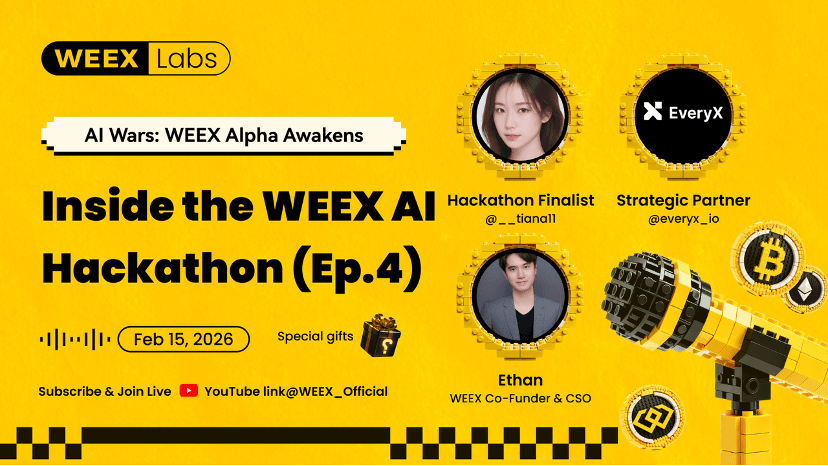
WEEX AI Trading Hackathon: 3 Key Insights on the Future of AI Trading & Prediction Markets
Dive into the key takeaways from the WEEX AI Trading Hackathon AMA. Get 3 critical insights from platform builders, prediction market experts, and winning traders on the future of AI trading, how to trade social sentiment, and why human-AI collaboration is the ultimate edge.

Beyond the Battle: PS5 Prizes, 1,000 USDT Giveaways & Key WEEX AI Trading Insights from Istanbul
Get key insights from the frontline of AI trading: Analysis of a live showdown in Istanbul reveals when human intuition beats AI, and where algorithms dominate. Learn the future of collaborative trading.

How Smart Money Tracker Survived Live AI Trading at WEEX AI Hackathon
Discover how WEEX AI Trading Hackathon tested strategies with real capital—no simulations. See how Smart Money Tracker survived flash crashes and leveraged 18x in live markets.
80% Win Rate to 40% Drawdown: An AI Trader's Brutal Recalibration at WEEX AI Wars
Dive into the technical blueprint of an AI trading system built on LLaMA reasoning and multi-agent execution. See how Quantum Quaser uses confidence thresholds & volatility filters at WEEX AI Wars, and learn the key to unlocking 95% win rate trades.
AI Trading Strategy Explained: How a Beginner Tiana Reached the WEEX AI Trading Hackathon Finals
Can AI trading really outperform human emotion? In this exclusive WEEX Hackathon finalist interview, discover how behavioral signal strategies, SOL trend setups, and disciplined AI execution secured a spot in the finals.

AI Trading vs Human Crypto Traders: $10,000 Live Trading Battle Results in Munich, Germany (WEEX Hackathon 2026)
Discover how AI trading outperformed human traders in WEEX's live Munich showdown. Learn 3 key strategies from the battle and why AI is changing crypto trading.
WEEX AI Trading Hackathon Rules & Guidelines
This article explains the rules, requirements, and prize structure for the WEEX AI Trading Hackathon Finals, where finalists compete using AI-driven trading strategies under real market conditions.
AI Trading's Ultimate Test: Empower Your AI Strategy with Tencent Cloud to Win $1.88M & a Bentley
AI traders! Win $1.88M & a Bentley by crushing WEEX's live-market challenge. Tencent Cloud powers your AI Trading bot - can it survive the Feb 9 finals?
How a Risk-Controlled AI Crypto Trading Bot Protects Capital in Real Markets
Ritmex demonstrates how disciplined risk control and structured signals can make an AI crypto trading bot more stable and reliable on WEEX, highlighting the importance of combining execution discipline with scalable AI trading systems.
How a Structured AI Crypto Trading Bot Won at the WEEX Hackathon
Crypto_Trade shows how structured inputs and controlled adaptability can build a more stable and reliable AI crypto trading bot within the WEEX AI Trading Hackathon, highlighting a practical path toward scalable AI trading systems.
How a Fully Automated AI Trading Bot Won at WEEX Hackathon (From 0 to AI Agent)
Nick’s journey on WEEX shows that successful AI Trading isn’t just about strategy ideas—but about structured AI agents, disciplined execution, and continuous adaptation in real market conditions.
Best AI Crypto Trading Bot? Inside the AI Trading System That Ranked Top 3 on WEEX
Discover the best AI crypto trading bot on WEEX. Learn how AI trading works, how to trade automatically, and why this system stands out among top AI trading apps.
OpenClaw and AI Bots: From AI Trading to BTC Liquidations in the Crypto Gold Rush
AI crypto trading bots like OpenClaw and AI trading apps are reshaping digital markets. From BTC liquidations to crypto bubble charts, automated trading is expanding alongside free crypto airdrops, affiliate programs, LALIGA partnerships, and tokenized gold markets.
Contents
Latest articles



Latest coin listings on WEEX


