
No Official XST Announcement Explains the X2O Rebrand: What's Actually Confirmed

 Prefer us on Google


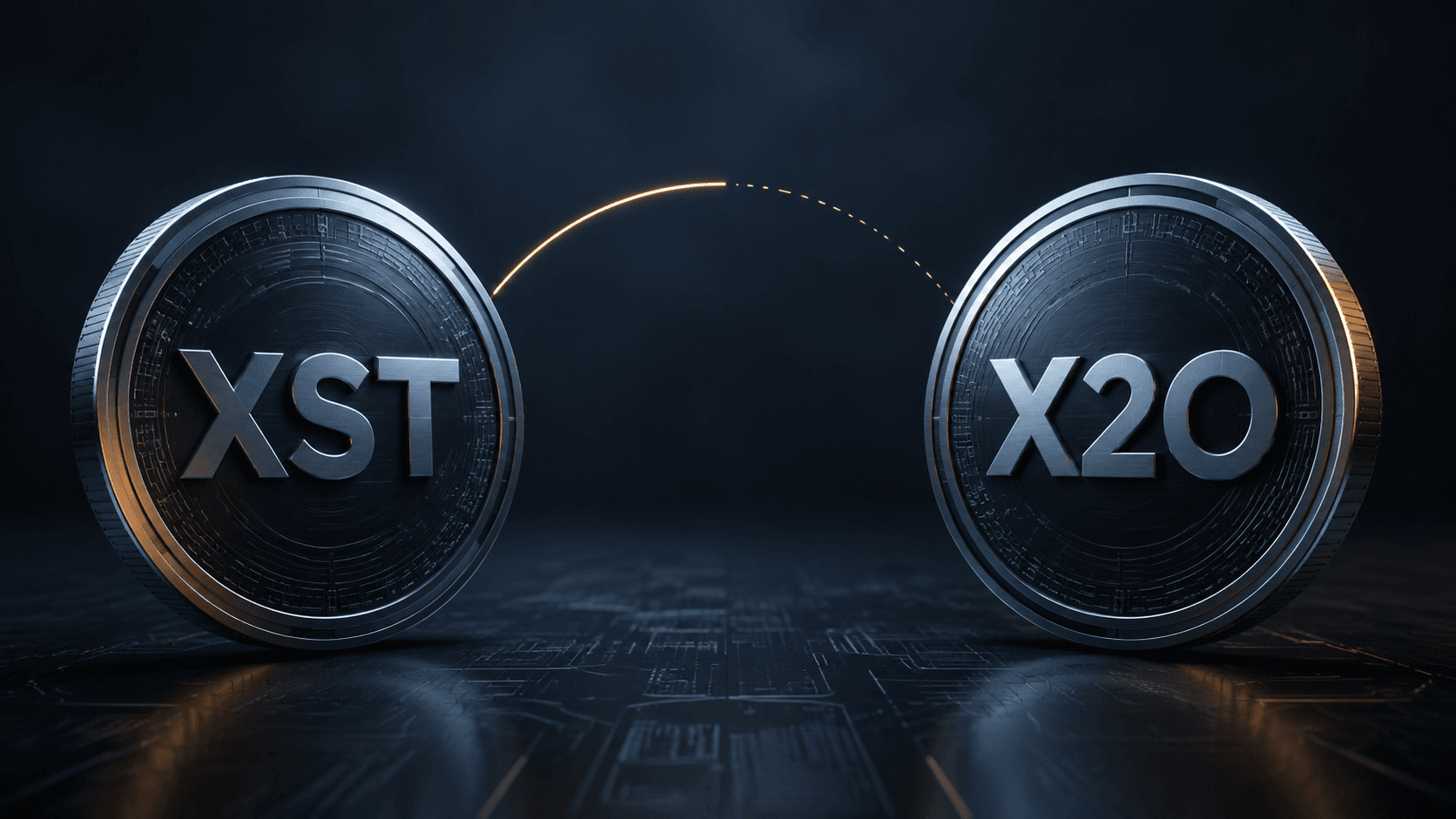
Something changed on XSolut's own token page, and nobody at the project has said what or why. Visit it today and the asset is mostly described as the "XSolut Token," but the trading section points users toward acquiring something called X2O through Jupiter instead. There's no header explaining a rebrand. No migration guide. No timeline. Just a ticker that doesn't match what most traders searching XST coin still expect to see.
That absence of explanation is the actual story here, more than the ticker itself. A legitimate rebrand or token migration is a routine, well documented event in crypto. What's happening on XSolut's page doesn't look like that, and understanding exactly what's missing is more useful than guessing at what X2O might mean.
Why this specific discrepancy matters
Ticker symbols get reused, renamed, and migrated constantly across crypto, and none of that is inherently alarming on its own. What makes a ticker change worth scrutinizing is whether it follows the pattern a real migration always follows, or whether it shows up without any of the supporting documentation that pattern requires.
XST already carries baggage on this front. The ticker is shared by multiple unrelated tokens across different chains, and XSolut-branded contracts exist under several different addresses with wildly different market activity, a confusion already significant enough to require its own separate explainer. Layering an unexplained second ticker, X2O, on top of an already-crowded naming situation raises the stakes on getting clarity, not lowers them.
Why this specific discrepancy matters
Ticker symbols get reused, renamed, and migrated constantly across crypto, and none of that is inherently alarming on its own. What makes a ticker change worth scrutinizing is whether it follows the pattern a real migration always follows, or whether it shows up without any of the supporting documentation that pattern requires.
XST already carries baggage on this front. The ticker is shared by multiple unrelated tokens across different chains, and XSolut-branded contracts exist under several different addresses with wildly different market activity, a confusion already significant enough to require its own separate explainer. Layering an unexplained second ticker, X2O, on top of an already-crowded naming situation raises the stakes on getting clarity, not lowers them.
There's also a timing dimension worth noting. This discrepancy surfaced during a period when XST was already drawing outsized attention for other reasons, including a viral but fabricated claim about a large investment tied to a named public figure. A confusing, unexplained ticker change landing in the middle of a period of heightened scrutiny and speculation makes the lack of an official response more conspicuous than it might be for a quieter token attracting less attention.
What actually appears on XSolut's own token page
As of the most recent check, the page mostly refers to the asset as the "XSolut Token" in its general description, while the trading section directs users to acquire X2O through Jupiter, Solana's primary swap aggregator. The two references sit on the same page without any note connecting them.
There is no explicit statement that X2O replaces XST. There is no explicit statement that X2O exists alongside XST as a separate asset. There is no explicit statement that this is simply a display error or an unfinished update. As of August 18, 2026, there was not enough public information available to confirm any of these possibilities, and nothing has surfaced since to resolve that ambiguity. The page presents X2O as a fact without ever explaining what fact it's presenting.
This kind of unexplained inconsistency tends to fall into one of a few categories, none of which can currently be ruled in or out. It could reflect a genuine, still unannounced migration in progress, with the public communication simply not caught up to a backend change yet. It could be an incomplete or reverted rebrand that the project started and then paused without cleaning up the interface. Or it could be an integration error, where a widget or third-party swap tool is pulling in the wrong reference entirely. Each of these has meaningfully different implications for a holder, and the page itself gives no way to distinguish between them.

-- Price
What a real rebrand or migration would actually look like
Token migrations happen often enough in crypto that the industry has a fairly standard playbook for them, and XSolut's page follows almost none of it. A genuine migration typically comes with a public announcement explaining the reason for the change, the old and new contract addresses stated explicitly side by side, the conversion ratio between the old and new token if one exists, a defined migration deadline, and a clear set of steps holders need to follow to convert their position.
Projects handling this properly will usually also publish a snapshot date, marking the exact block or timestamp used to determine which holders qualify for the new token, and will actively warn users away from continuing to trade the old, soon-to-be-unsupported contract. Established exchanges and data aggregators typically receive advance notice as well, so that listings, trading pairs, and price tracking can be updated in sync with the migration rather than lagging behind it or showing conflicting information during the transition window.
None of these elements are currently visible on XSolut's official channels. A silent ticker swap embedded in a trading widget is not a substitute for any of this, and the absence of the standard migration checklist is itself informative about how far along, or how legitimate, this change actually is. A project with a genuine, ready to execute migration plan generally has strong incentives to publicize it clearly, since ambiguity mainly benefits confusion and works against the very holders a migration is supposed to serve.
Why the multiple token problem makes this worse
XSolut's naming situation was already fragile before X2O entered the picture. The token most commonly discussed in current market coverage is a Solana based asset, and confirming you're looking at the right one requires matching the exact contract address rather than trusting a name or ticker that multiple unrelated projects have also adopted.
An unexplained second ticker doesn't just add one more variable to track. It interacts with the existing confusion in a way that makes each individual verification step less reliable on its own. A trader who has already learned to distrust the ticker "XST" because of lookalike tokens now also has to figure out whether "X2O" refers to the same underlying project, a genuine successor token, or something else entirely, without a single authoritative source clarifying the relationship between any of these names.
This compounding effect is worth taking seriously because it changes the burden of verification. In a clean naming environment, a single ticker check might be sufficient. Here, a ticker check tells you almost nothing on its own, because the same ticker can point to entirely different assets depending on which chain, which contract, and now potentially which token page reference is being used. Every additional unexplained name added to that mix increases the number of independent checks a careful holder needs to run before feeling confident about what they actually hold or are about to buy.
What to actually check before assuming anything
Given the absence of an official explanation, the only reliable approach is to verify against the specific, checkable data points that exist independent of either ticker. The project's actual Solana contract address is the single most important thing to confirm, since addresses can't be faked the way a display name or ticker symbol can.
Beyond that, checking which platforms and trading pairs are actually showing volume tied to a specific contract, rather than assuming a ticker match is sufficient, is the more reliable way to determine what's currently trading and where. Cross-referencing that contract address against multiple independent trackers, rather than relying on a single source, adds a further layer of confidence, since it reduces the chance of being misled by any one platform's outdated or mislabeled listing.
Until XSolut publishes an actual statement addressing the X2O reference directly, with the standard migration details a legitimate change would include, treating the two names as unconfirmed and unrelated, rather than assuming one has replaced the other, is the more defensible position. Acting on an assumption in either direction, that X2O is definitely the real successor or that it's definitely meaningless, means acting on information the project itself hasn't actually provided.
Conclusion
Nothing currently confirms that XST has been renamed X2O, and nothing currently rules it out either. What's confirmed is only that XSolut's own token page displays both names without explanation, that none of the standard documentation a real migration would include has surfaced, and that this ambiguity is sitting on top of a token that already has a well-documented multiple-listing confusion problem.
The responsible approach in the absence of clarity isn't to pick a side and assume either that X2O is the real path forward or that it's a meaningless artifact. It's to treat the discrepancy as an open question, verify holdings against contract addresses rather than names, and wait for XSolut to close the gap with an actual statement before making any decision that depends on knowing which ticker is correct.
FAQ
1. Has XST officially been renamed X2O?
Not confirmed. XSolut's token page references both names without an official statement explaining the relationship between them.
2. What details are missing that a real token migration usually includes?
An explanation for the change, the old and new contract addresses, a conversion ratio, a migration deadline, and clear steps for holders. None of these currently appear on XSolut's channels.
3. Does the X2O reference mean XST holders will get a new token?
There's no confirmation of this. XSolut has not published any statement addressing whether X2O replaces, coexists with, or is unrelated to XST.
4. Why does this matter more for XST than for other tokens?
XST already suffers from multiple unrelated tokens sharing its name and ticker across different chains, so an unexplained second ticker adds to an existing verification problem rather than being an isolated issue.
5. What's the safest way to verify which token is the real XSolut asset?
Match the exact Solana contract address rather than relying on the ticker or display name, since addresses can't be duplicated the way a name or symbol can.
This content is provided for general informational purposes only and doesn't constitute financial, investment, legal, or tax advice. Any events, rewards, online promotions, or related information mentioned herein should not be considered a recommendation, solicitation, or invitation to purchase, sell, trade, or otherwise deal in any crypto assets. Crypto assets are highly volatile and may result in loss. The availability of WEEX services, products, and related events may vary by region. You are responsible for ensuring that your participation is in accordance with applicable local laws and regulations.
You may also like
CYBERLINK or CYBERLEEK? Check the Ticker and Chain Before Trading
Is CyberLeek (CYBERLEEK) Safe? Price Crash and Key Token Risks Explained

Why USDT Still Dominates Crypto Buying in Pakistan Today
How to Log In to MetaMask: Unlock, Troubleshooting and Recovery (2026)
Bybit Japan Service Termination: The Complete Timeline and What Happens on July 22, 2026
Nvidia Holds a $21 Billion Stake in SpaceX: What That Position Actually Tells Investors About Both Stocks
JazzCash P2P Trading: Merchant Vetting, Payment Limits, and the Hidden Account Freeze Risk
Who Gets the Next HUMA Tokens? Investors, Team Allocations and the PayFi Unlock Risk
PDD Q2 2026 Earnings Miss: Is the Stock Undervalued Now?
Best Futures Exchange in Pakistan for 2026? What Leverage, Liquidity, and Liquidation Risk Actually Require
Bitcoin Hits $70K: How Trump’s CLARITY Act Could Impact Crypto Markets
WEEX API Guide: From API Key to Your First Signed Order
XST Coin and Stargate: What XSolut's AI Infrastructure Narrative Has to Do With the $500 Billion OpenAI Project
SK Hynix (SKHY) Announces Record $28.6 Billion Buyback: 40 Trillion Won in Shares to Be Cancelled, Shareholder Return Target Raised Above 50%
QQQB and the Fed: What the FOMC Minutes Mean for Nasdaq-100

ETH to USDT: What the Converter Rate Leaves Out
What Is a Crypto Exchange API and Which Permissions to Enable
What Is Espresso (ESP)? The Rollup Confirmation Layer, Tokenomics and the 2027 Unlock
The XSolut (XST) Contract Address: How to Identify the Real XST Token on Solana 2026
Meta Stock Falls as 29 States Begin Federal Child Safety Trial: What the "Big Tobacco Moment" Warning Actually Means

Adobe Stock Jumps After BlackRock Raises Stake to Over 10%: What an $8.4 Billion Bet Actually Signals
Why Does XSolut (XST) Show Different Prices on CoinGecko, Phantom, and Solana DEXs? 2026 Guide
Nvidia Discloses a $21 Billion Stake in SpaceX: What the World's Largest AI Chipmaker Owning SPCX Actually Signals
How to Buy Niulai Coin: Where to Trade NIULAI and What to Check Before Buying
XST Coin vs Akash Network: How Two AI Infrastructure Tokens Compare
Tencent Stock (0700): Where the Shares Actually Trade, and What Each Venue Owes You
PROM on 12 August 2026: What Upbit Added and What the Price Did
AMD Stock vs Nvidia Stock: Who Is Winning the AI Chip Race Heading Into Q2 Earnings?

SK Hynix Stock Price Prediction 2026-2027: Can SKHY Reach $250 After the Q2 Earnings Miss?
STABLE Crypto Airdrop Guide: How to Claim 50,000 USDT Rewards on WEEX
CYBERLINK or CYBERLEEK? Check the Ticker and Chain Before Trading
Is CyberLeek (CYBERLEEK) Safe? Price Crash and Key Token Risks Explained
Why USDT Still Dominates Crypto Buying in Pakistan Today
How to Log In to MetaMask: Unlock, Troubleshooting and Recovery (2026)
Bybit Japan Service Termination: The Complete Timeline and What Happens on July 22, 2026
Nvidia Holds a $21 Billion Stake in SpaceX: What That Position Actually Tells Investors About Both Stocks
Contents
Popular coins
Latest articles


